Built in the early 19th century, the Hue Citadel of the Nguyen Dynasty was recognized as a UNESCO World Cultural Heritage in 1993 with hundreds of elaborate constructions, bearing ancient beauty, bearing the imprint of feudal historical culture. The overall architecture of the Hue Citadel is not only valuable in terms of decorative arts and sculptures, but it is also the only remaining royal palace system in Vietnam.
The Hue Citadel was built in the early 19th century with about 147 constructions on a total area of up to 520 hectares. This is a witness to the last feudal dynasty in Vietnamese history. The Hue Citadel and the palace systems inside were built on a symmetrical axis. In which the central axis is the constructions reserved only for the king. The architectural works on both sides will be arranged strictly according to each area and follow the rules of “left male, right female”, “left civil, right military”. Even inside the temple, the order is left first, right last.
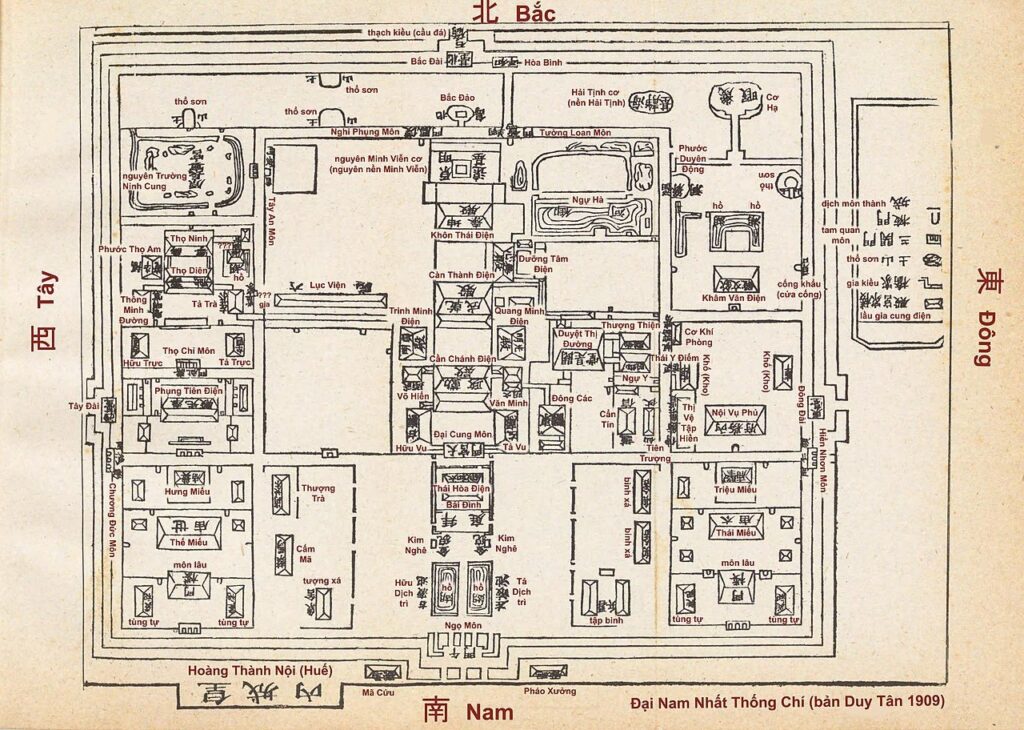
The structure inside the Hue Citadel is divided into two main areas: the Imperial City and the Forbidden City. The two areas are collectively known as the Hue Citadel. In which, the Imperial City is the area where important rituals and political activities of the royal court are performed and where shrines are arranged. With the Forbidden City, this is the place where the king and his relatives work and live daily.
1. Imperial City
The Imperial City is the second wall inside the Hue Citadel with a palace system and more than 100 large and small structures. The Imperial City area has 4 gates on 4 sides, of which the main gate is called Ngo Mon (located in the South). Below are some typical structures in the Imperial City area:
• Ngo Mon: is the main gate leading to the Imperial City. This is where the Military Review, the Truyen Lo ceremony (reading the names of new graduates) and the Ban Soc ceremony (the ceremony to issue the new year calendar) are held.
• Thai Hoa Palace: The palace together with the audience courtyard (Dai Trieu Nghi courtyard) is where the court is held and important court ceremonies take place such as: coronation ceremony, king’s birthday, reception of envoys, etc. The king’s throne is placed under the canopy inside Thai Hoa Palace.
• Temples: The area of temples is arranged in front and along both sides of the axis of the Imperial Citadel. This is the place to worship ancestors and kings of the Nguyen Dynasty such as:
• Noi Vu Palace: The agency responsible for storing assets and items for the king, the royal family and public property such as: gold, jade, jewels, brocade, silk, musical instruments, tributes, etc. Noi Vu Palace also has the task of producing items for the king and the inner palace to use.
• Co Ha Garden – Kham Van Palace: This is one of the five royal gardens inside Hue Imperial Citadel and is the area for princes to study and entertain.
• Truong Sanh Palace, Dien Tho Palace: Area for the Grand Empress Dowager (the king’s grandmother) and the Queen Mother (the king’s mother).
2. Forbidden City
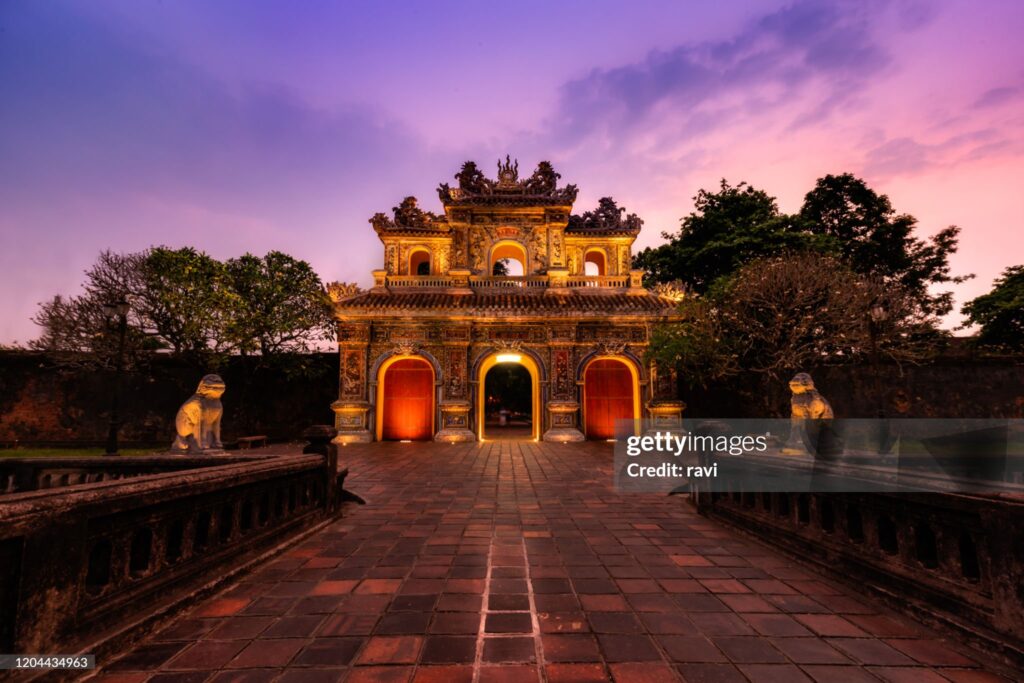
The Forbidden City is located inside the Imperial City and is the innermost area of the Hue Citadel. Inside the Forbidden City, it is divided into many areas with dozens of architectural works:
• Dai Cung Mon: Main gate leading to the Forbidden City
• Can Thanh Palace: Residence of the king
• Khon Thai Palace: Residence of the Queens, Royal Noble Consorts
• Duyet Thi Duong: Theater performing royal plays for the king, royal relatives, and high-ranking mandarins, envoys, etc.
• Thuong Thien: Cooking area for the king
• Duong Tam Institute, Thai Binh Lau: Where the king rests and reads
• Minh Quang Palace: Residence of the princes
• Trinh Minh Palace: Residence of the concubines
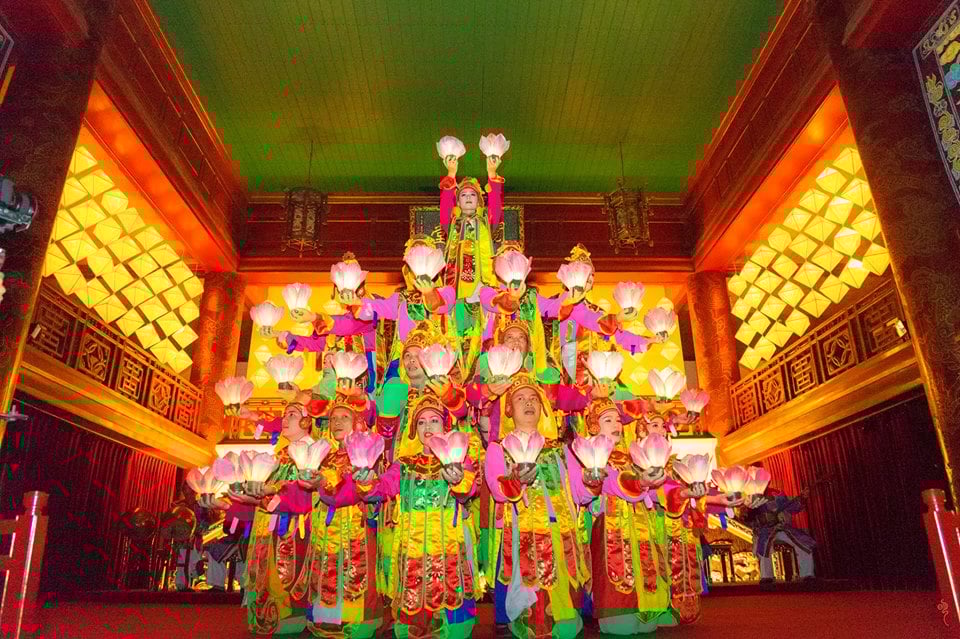
Any season of the year is suitable for visiting the Hue Citadel. However, the best time to come here is in April or June of even years. During this time, Hue will have a vibrant festival with many unique art activities such as water puppetry and Hue singing. Especially when traveling to Hue Citadel, visitors will have the opportunity to enjoy Hue Royal Court Music (similar to Japanese geisha dance).
To have the most complete sightseeing experience, please note the following when traveling to Hue Citadel:
• Dress politely: Hue Citadel is a cultural relic with long-standing historical value, so you need to pay attention to choosing polite clothes, avoid wearing revealing and offensive clothes.
• Comply with the rules of the tour: You should strictly follow the rules and regulations at each tourist attraction: do not touch artifacts, do not record in unauthorized places, maintain hygiene, avoid making noise, do not joke in sacred places, etc.
• Refer to the map: This is the experience of traveling to Hue Citadel shared by many people. Accordingly, you should read the map in advance, determine the route and attractions to avoid wasting time traveling.
–For tourists on Hue tours: You should follow the tour guide closely to avoid getting lost and listen to the explanation of interesting historical stories at the relics.
In addition to the famous Hue Citadel tourist destination, Hue’s very own highlight is the dreamy nostalgic beauty for tourists who want to find peace and quiet. When you come to Hue, don’t forget to take a boat ride on the Perfume River to drink tea, listen to music and enjoy delicious dishes from the royal cuisine and folk cuisine of Hue.