A famous historical underground base system, Cu Chi Tunnels is a must-see when traveling to Vietnam. Known as the “underground city”, this tourist destination has 3 different depths, the highest level is about 3m below ground, the middle level is 6m below ground and the deepest level is up to 12m.
Located about 70km northwest of Ho Chi Minh City, Cu Chi Tunnels is a creation of the army and people of Cu Chi during the long, fierce resistance war for 30 years against invaders.
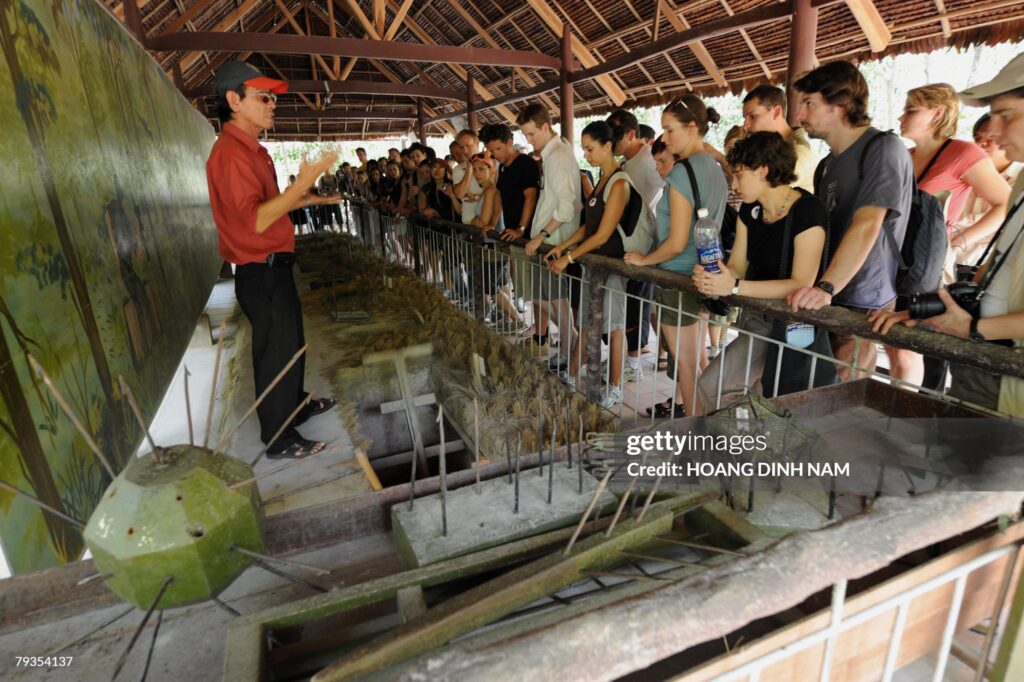
This is a unique and unparalleled war wonder with about 250 km of tunnels spreading like a spider web underground, with structures connected to the tunnels such as: trenches, mounds, fighting nests, dining, sleeping, meeting, living, medical, food storage, water wells, Hoang Cam kitchen (smokeless stove) …
Tunnel structure
The tunnels appeared in Cu Chi since 1948, the tunnel digging was done by hand with hoes for more than 21 years.
The tunnel system runs zigzag underground, from the main road spreading out countless long and short branches, connecting with each other. In the tunnels, there are resting places, weapons storage, food, drinking water, water wells, Hoang Cam kitchen (smoke hidden stove in the ground), working tunnels for leaders and commanders, surgical tunnels, nursing wounded soldiers, sturdy A-shaped tunnels for women, the elderly, and children to take shelter. There are large tunnels with airy roofs, camouflaged above for meetings, film screenings, art performances, etc.
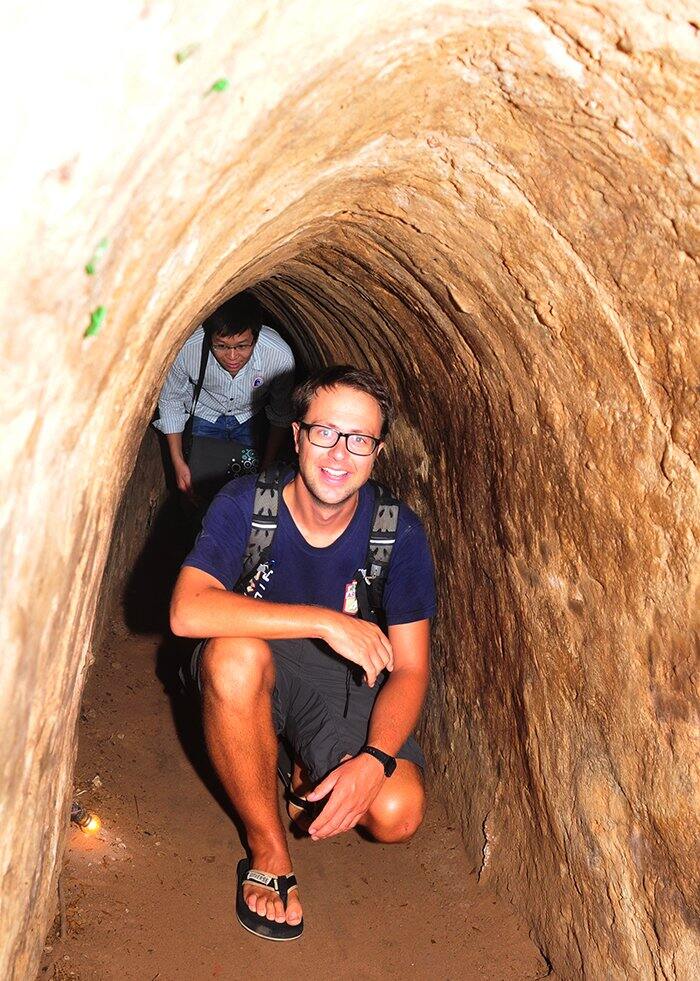
Cu Chi Tunnels are places that have witnessed harshness beyond human endurance. Because the underground is dark and narrow, it is very difficult to move around, most people walk stooped or crawl. The tunnels are damp and stuffy in places due to lack of oxygen and light (light is mainly candles or flashlights).
The war and losses
Cu Chi Tunnels contributed to the war with 4,269 large and small battles, capturing 8,581 guns of all kinds, eliminating more than 22,582 enemies (including more than 10,000 Americans, 710 captured), destroying more than 5,168 military vehicles (mostly tanks and armored vehicles); shooting down and damaging 256 aircraft (mainly helicopters), sinking and burning 22 combat boats, destroying and forcing the withdrawal of 270 outposts.
Preliminary statistics in the whole Cu Chi district have suffered: 50,454 sweeps; 10,101 civilians died; over 10,000 officers and soldiers sacrificed; 28,421 roofs burned; 20,000 hectares of fields and forests destroyed…
With the value and stature of the feats that were forged with the blood and efforts of tens of thousands of soldiers and compatriots, the Cu Chi tunnel base has been recognized by the Ministry of Culture, Sports and Tourism of Vietnam as a National Historical and Cultural Relic, attracting millions of domestic and foreign visitors to visit and travel. This is a meeting place to nurture patriotism and national pride of generations of Vietnamese people and is the admiration of international friends.
Notes when visiting Cu Chi tunnels
The Cu Chi tunnel relic management board does not have too many strict requirements for tourists. However, due to the nature of the sightseeing and experiencing activities at the relic, there are a few issues you should note in advance.
To have the most enjoyable and complete tour, remember:
• Prepare before going: The relic site is located outdoors, you should apply sunscreen and wear a hat for better sun protection.
• Ensure your health: The most interesting way to visit Cu Chi tunnels is to crawl through the tunnel – experience being underground. However, those with low blood pressure should only visit the outside or visit the large tunnel area.
• Wear appropriate clothing: Wear neat clothes and sneakers for easy movement in the tunnel.
• No need to prepare food and drinks: Near the relic site there are many restaurants with a variety of specialties, you do not need to bring too much food and drinks to avoid carrying heavy loads.
• For tourists on the Cu Chi Tunnels tour: Follow the tour guide closely to avoid getting lost and listen to the fascinating historical stories at the site.
• For individual tourists: Listen carefully to the instructions of the members of the site management board, do not enter the tunnel without the consent and supervision of the tour guide.